Tutorials
Tutorial Session at IISA 2026
Wednesday, July 8, 2026, 15:55-16 :25
Translating Academic Research to Patentable Applications
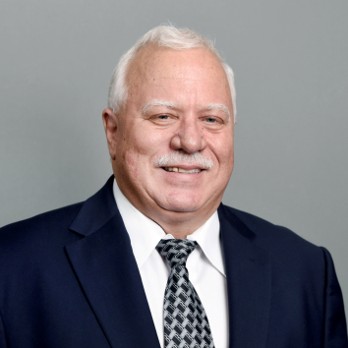
Presenter: Andreas Spanias, Professor ECEE, ASU
Director SenSIP Center and Industry Consortium
This tutorial discusses strategies for transforming university research into patentable inventions and commercial technologies with societal impact. Drawing on examples from the research activities of Andreas Spanias and the SenSIP Center at Arizona State University, the presentation will highlight the pathway from fundamental research to intellectual property, technology transfer, and startup formation. The seminar will present representative examples from a portfolio of 30 issued U.S. patents and multiple provisional patents spanning machine learning, signal processing, sensor systems, audio and speech technologies, and renewable energy systems. Particular emphasis will be placed on innovations in photovoltaic (PV) monitoring, fault detection and solar energy optimization that resulted in both patents and the formation of a company focused on AI-based PV fault detection and energy management solutions. A central theme of the seminar is the role of student mentorship in innovation. Many of the patents were developed through collaborative efforts involving graduate students and in a few cases undergraduate researchers engaged in the NSF Research Experiences for Undergraduates (REU) program. The presentation will discuss approaches for engaging students in translational research, creating opportunities for co-authorship, invention disclosures, and startup activities. Recent work in quantum machine learning (QML) will also be highlighted, including applications to medical imaging, energy systems, and signal processing. These efforts have produced peer-reviewed publications as well as provisional patent filings involving quantum signal processing methods and other emerging QML technologies. The seminar concludes with lessons learned on building innovation ecosystems that connect research, education, and intellectual property while preparing the next generation of inventors and technology leaders.
Biography
Andreas Spanias is Professor in the School of Electrical, Computer, and Energy Engineering at Arizona State University (ASU). He is also the director of the Sensor Signal and Information Processing (SenSIP) center and the founder of the SenSIP industry consortium (also an NSF I/UCRC site). His research interests are in the areas of adaptive signal processing, speech processing, quantum machine learning and sensor systems. He and his student team developed the computer simulation software Java-DSP and its award-winning iPhone/iPad and Android versions. He is author of two textbooks: Audio Processing and Coding by Wiley and DSP; An Interactive Approach (2nd Ed.). He contributed to more than 400 papers, 11 monographs, 30 US patents and 10 provisional patents. He served as Associate Editor of the IEEE Transactions on Signal Processing and as General Co-chair of IEEE ICASSP-99. He also served as the IEEE Signal Processing Vice-President for Conferences. Andreas Spanias is co-recipient of the 2002 IEEE Donald G. Fink paper prize award and was elected Fellow of the IEEE in 2003. He served as Distinguished Lecturer for the IEEE Signal processing society in 2004. He is a series editor for the Springer lecture series on algorithms and software. He co-authored with his students a paper on Quantum Fourier transforms for signal analysis-synthesis at ICASSP 2023 that received a Top 3% rating certificate. He is currently heading four NSF workforce development projects as a PI. He received the 2018 IEEE Phoenix Chapter award with citation: “For significant innovations and patents in signal processing for sensor systems.” He also received the 2018 IEEE Region 6 Outstanding Educator Award (across 12 states) with citation: “For outstanding research and education contributions in signal processing.” He was elected to Senior Member of the National Academy of Inventors (NAI). He was named Fulbright U.S. Research Scholar and conducted research in machine learning for energy and other applications in the Balkans.