
Keynote Speakers
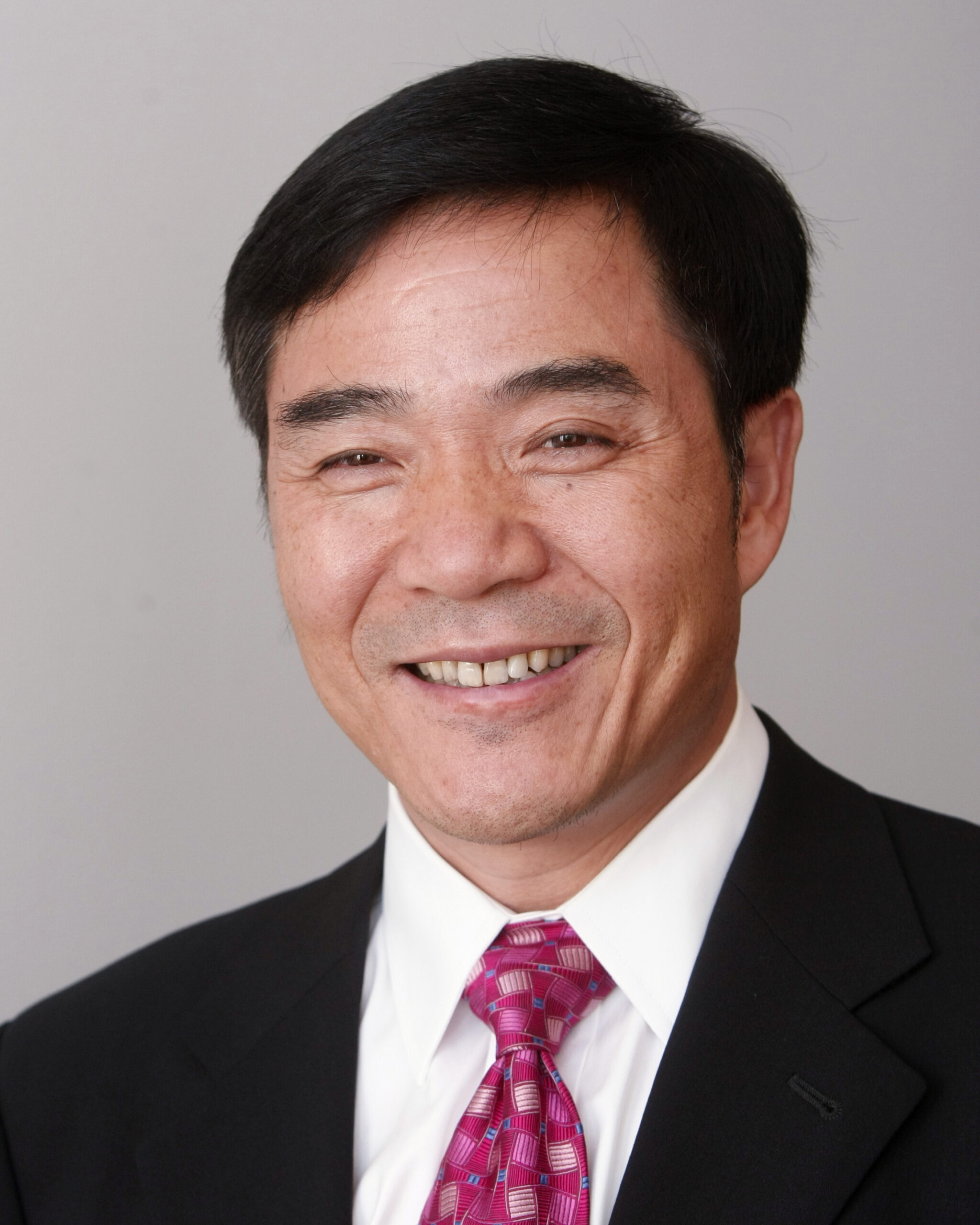
Peter Hall Lecture
by Professor Jianqing Fan, Princeton University
Title
Classification and diffusion-induced neural density estimators and simulators for generative AI
Abstract
Neural network-based methods for conditional density estimation have recently gained substantial attention, as various neural density estimators have outperformed classical approaches in real-data experiments. Despite these empirical successes, implementation can be challenging due to the need to ensure non-negativity and unit-mass constraints, and theoretical understanding remains limited. In particular, it is unclear whether such estimators can adaptively achieve faster convergence rates when the underlying density exhibits a low-dimensional structure. This paper addresses these gaps by proposing a structure-agnostic neural density estimator, called the classification-induced neural density estimator and simulator (CINDES) that is straightforward to implement and provably adaptive, attaining faster rates when the true density admits a low-dimensional composition structure. Another key contribution of our work is to show that the proposed estimator integrates naturally into generative sampling pipelines, most notably score-based diffusion models, where it achieves provably faster convergence when the underlying density is structured. We validate its performance through extensive simulations and a real-data application. We also prove the optimality of score-based diffusion models for density estimation when the target density admits a factorizable, low-dimensional, nonparametric structure in a separate work. The main challenge is that the low-dimensional, factorizable structure no longer holds for most diffused timesteps, and it is very difficult to show that these diffused score functions can be well approximated without a significant increase in the number of network parameters.
(Join works with Yihong Gu, Dehao Dai, Mukherjee, and Ximing Li)
Biography
Jianqing Fan, Academician of Academia Sinica and member of Royal Academy of Belgium, is the Frederick L. Moore Professor at Princeton University. He was a professor at UNC-Chapel Hill, UCLA, and the Chinese University of Hong Kong, and the president of the Institute of Mathematical Statistics and the International Chinese Statistical Association. He is the joint editor of the Journal of the American Statistical Associationand was the co-editor of The Annals of Statistics, Probability Theory and Related Fields, Econometrics Journal, Journal of Econometrics, and Journal of Business and Economics Statistics. His research interests include high-dimensional statistics, data science, machine learning, mathematics of AI, financial economics, and computational biology. He coauthored 4 books and published over 300 papers. His published work has been recognized by The 2000 COPSS Presidents’ Award, Morningside Gold Medal of Applied Mathematics, Guggenheim Fellow, P.L. Hsu Prize, Guy medal in silver, Noether Distinguished Scholar Award, Le Cam Award and Lecture, Frontiers of Science Award, and Wald Memorial Award and Lecture, and follow of American Associations for Advancement of Science, Institute of Mathematical Statistics, American Statistical Association, and Society of Financial Econometrics
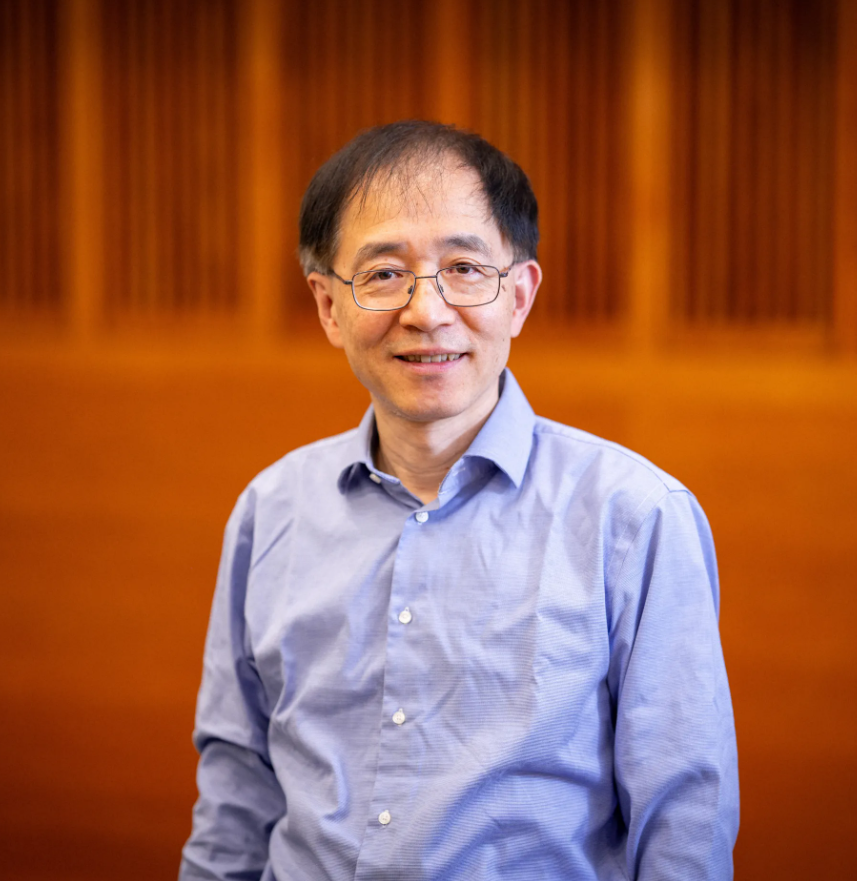
Keynote Lecture
by Professor Xuming He, Washington University in St. Louis
Title
Distributed-oracle estimation for high-dimensional quantile regression
Abstract
Quantile regression (QR) is a valuable tool for analyzing heterogeneous covariate effects across the entire outcome distribution including lower and upper tails. However, implementing QR in high-dimensional settings where data are decentralized presents computational and communication hurdles. We propose a communication-efficient estimator for high-dimensional QR designed for data distributed across multiple machines. To use folded-concave penalties, we develop an iterative multi-step (IM) algorithm utilizing a surrogate smoothed quantile loss. This approach effectively balances statistical efficiency with communication constraints. To provide a theoretical foundation for our method, we introduce the concept of a distributed-oracle estimation and demonstrate that the IM estimator converges to this oracle with high probability. Furthermore, we extend our framework to enable distributed inference for specific low-dimensional components of interest. This talk is based on joint work with SongshanYang, Yifan Gu, and Hangfang Yang.
Biography
Xuming He is the Kotzubei-Beckmann Distinguished Professor and Inaugural Chair of Statistics and Data Science at the Washington University in St. Louis. His research focuses on robust statistics, semiparametric regression, Bayesian inference, and post-selection inference. His interdisciplinary work promotes the application of statistics and data science across various fields, including biosciences, public health, and socioeconomic studies.
He is an elected Fellow of the American Association for the Advancement of Science (AAAS), the American Statistical Association (ASA), and the Institute of Mathematical Statistics (IMS). He is Past President of the International Statistical Institute (ISI), and currently serves as a Joint Editor of the Journal of the Royal Statistical Society – Series B. His recent honors and awards include the IMS Carver Medal (2022), ASA Founders Award (2021), and the Gottfried E. Noether Distinguished Scholar Award (2025) from the ASA.

Keynote Lecture
by Professor Dimitris N. Politis, of University of California at San Diego
Title
Predictive Inference in Nonparametric Regression: Model-free Bootstrap, Conformal Prediction, and Pertinent Prediction Intervals
Abstract
Predictive inference in a general regression setting is attracting progressively more attention in the big-data era. Given a nonparametric model driven by i.i.d. errors, model-based bootstrap procedures can be devised to yield prediction intervals for a future response associated with a regressor value of interest. Ideally, the bootstrap procedure will be designed to mimic/incorporate the variability of all estimated components; in this case, the resulting prediction intervals are called `pertinent’. If a model equation is not available, there are three possible avenues: Model-free bootstrap, conformal prediction, and quantile estimation. The three approaches will be contrasted via theoretical analysis as well as numerical experiments with a focus on conditional coverage; in particular, three notions of conditionality will be described that are nested in terms of increasing strength. Under mild conditions, we can show that the Model-free bootstrap yields prediction intervals with guaranteed better conditional coverage compared to quantile estimation using any one of the three notions of conditionality. We also extend the concept of pertinence of prediction intervals to the nonparametric regression setting, and give concrete examples where its importance emerges under finite sample scenarios. Time-permitting, an application of Model-free and conformal prediction to Markov sequences will be given.
[Joint work with Yiren Wang, Dehao Dai, and Kejin Wu.]
Biography
Dimitris N. Politis earned his Ph.D. in Statistics from Stanford University after a tour of various disciplines including Mathematics, Electrical Engineering, and Computer and Systems Engineering. He held tenured faculty positions at Purdue University and the University of Cyprus before moving to the University of California at San Diego where he currently serves as Distinguished Professor of Mathematics and Data Science, and holds the Halicioglu Data Science Institute Chancellor’s Endowed Chair.
His research in the last thirty years has been in the general area of Nonparametric Statistics, and in particular on Time Series Analysis, Resampling and Subsampling for Dependent Observations, Spatial Statistics, Random Fields and Point Processes, Information Theory and Signal Processing, Nonparametric Function Estimation, Spectral and Probability Density Estimation, and Model-free Prediction and Regression.
He has (co)authored three books and over 150 journal papers, and has given numerous lectures and seminars worldwide. He has organized several international workshops and conferences, and has served on the Editorial Board of a number of journals. He is a Fellow of the Institute of Mathematical Statistics and of the American Statistical Association, co-founder of the International Society for Nonparametric Statistics, and former Fellow of the Guggenheim Foundation.
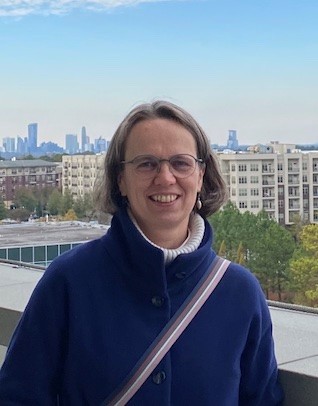
Keynote Lecture
by Professor Ingrid Van Keilegom, of KU Leuven
Title
When Censoring Is Not Innocent: Challenges and Solutions for Dependent Censoring in Survival Analysis
Abstract
Survival analysis relies on a deceptively simple assumption: censoring is independent of the event of interest. In practice, however, this assumption is often violated. Patients may drop out because their health deteriorates, treatments may be discontinued in response to emerging risk, and follow-up may depend on factors that are themselves related to survival. Such dependent censoring can introduce substantial bias, undermine the validity of standard estimators, and lead to misleading scientific conclusions.
In this talk, I will explore why dependent censoring is one of the most challenging—and frequently overlooked—threats to reliable time-to-event analysis. Using examples from clinical and observational studies, I will illustrate how dependent censoring arises, how it distorts inference, and why conventional survival methods can fail.
I will then discuss methodological approaches for addressing dependent censoring, with particular emphasis on copula-based models that explicitly characterize the dependence between survival and censoring times. These models provide a flexible framework for sensitivity analysis and for quantifying the impact of departures from the independent censoring assumption. In addition, I will present recent developments on the partial identification of survival quantities under dependent censoring, as well as new results on identifiability and verifiability in enriched data settings. Dependent censoring will serve as a motivating example of a broader question at the heart of statistical inference: what can—and cannot—be learned from incomplete data?
Biography
Ingrid Van Keilegom is a professor of statistics at KU Leuven, and part-time professor at UCLouvain, both in Belgium. She obtained her PhD in 1998 from Hasselt University, and worked at Penn State University (US), Eindhoven University of Technology (Netherlands) and UCLouvain before starting in Leuven in 2016. Her research focuses on several aspects of survival analysis (dependent censoring, cure models, interval censoring, competing risks,…), non- and semiparametric regression, quantile regression, measurement error problems, instrumental regression, bootstrap, and their applications. Ingrid was holder of an Advanced ERC grant (2016-2022) focusing on specific problems in survival analysis. She is a fellow of the Institute of Mathematical Statistics (2008), a fellow of the American Statistical Association (2013), and has been co-editor of the Journal of the Royal Statistical Society – Series B (2012-2015), and associate editor of several other leading journals. She obtained a Honorary Degree from the University of A Coruña in Spain in 2022, and is an elected member of the Royal Flemish Academy of Belgium for Science and the Arts since 2021.
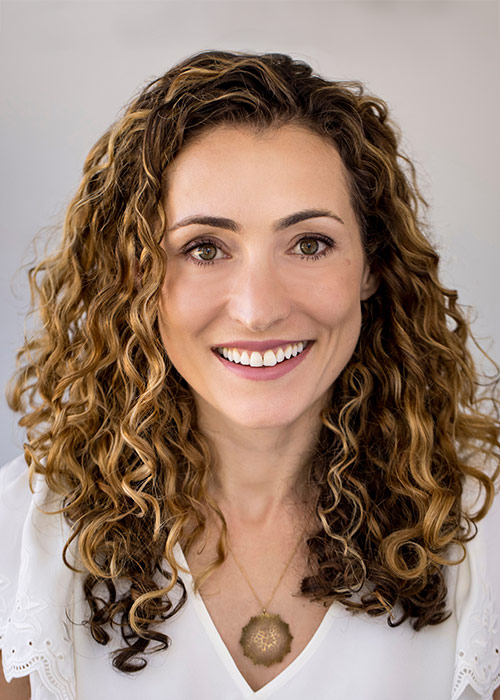
Keynote Lecture
by Professor Daniela Witten, University of Washington
Title
Testing hypotheses via orthogonalization
Abstract
Classical hypothesis testing frameworks break down in contemporary settings in which null hypotheses are increasingly abstract, the same data are used to both generate and test hypotheses, and minimal assumptions about the underlying data are made. In this work, we propose a new framework for conducting valid hypothesis tests in broad contexts. We propose to add and subtract external noise generated from a symmetric shift-family to our data, X, to partition it into two pieces, X1 and X2. We provide a generic strategy for orthogonalizing X2 against X1 under the null hypothesis H0, then show that testing whether the orthogonalization was successful provides a valid test of H0 under mild assumptions. Remarkably, this framework extends naturally to the post-selection inference setting with minimal modifications: we simply select a hypothesis on X1, then perform orthogonalization under the selected null. As our approach neither requires pre-specification of the selection mechanism, nor is restricted to a small class of data-generating distributions, it dramatically expands the settings for which valid post-selection inference can be conducted. We showcase the flexibility of our proposal in a number of case studies. This is joint work with Ameer Dharamshi (University of Washington).
Biography
Daniela Witten is a professor of Statistics and Biostatistics at University of Washington, and the Dorothy Gilford Endowed Chair in Mathematical Statistics. She develops statistical machine learning methods for high-dimensional data, with a focus on unsupervised learning.
She has received a number of awards for her research in statistical machine learning: most notably the Spiegelman Award from the American Public Health Association for a (bio)statistician under age 40, and the Presidents’ Award from the Committee of Presidents of Statistical Societies for a statistician under age 41.
Daniela is a co-author of the textbook “Introduction to Statistical Learning”, and previously served as Joint Editor of Journal of the Royal Statistical Society, Series B.